
 |
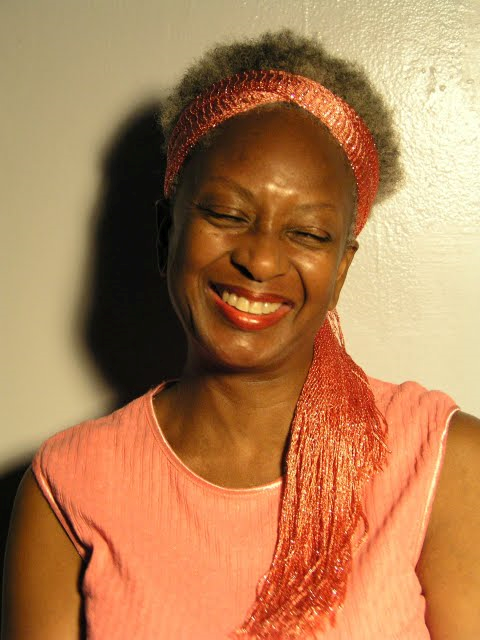
| Photo Credit: D. Feller |
by Daniel Foner
I recently had the opportunity to ask a few questions to Eva Yaa Asantewaa, an acclaimed dance writer based in New York City. If you’d like to learn more about her, I encourage you to visit her blog, InfiniteBody. For now, however, I’ll leave you with our conversation, which speaks for itself better than any introduction could.
DF: What first interested you in writing about dance?
EYA: I was always a writer, from childhood, writing poetry and satire and creative versions of the television shows I loved (what today might be called fan fiction). I read a lot and wrote a lot, training myself to write, and I was always very good at it. I was one of those introverted kids who expressed herself best in writing--and perhaps I still am!
I have also loved dancing since I was a kid--at family parties with lots of Afro-Caribbean and Black American music and, later, rock and soul and the like. It's only now that I realize that not only was I a talented dancer at that time, I was a choreographer! I'd had limited exposure to ballet classes when I was young but, in the coming years, I would pick up folkdance, modern (Graham, Ailey, even Isadora Duncan), jazz dance and Middle Eastern dance classes but never with a serious thought of becoming a professional. I didn't really have a role model for that, and I had absolutely zero family support for that as a career option!
When I graduated from college, I needed something to relieve the depression that I'd fallen into, and I remembered how good and healing it had always felt to take dance classes. So, I went back--to jazz dance, to Afro-Caribbean--and took up bellydance, which is probably the dance form that I studied for the longest. And it was great feeling to get my authentic energy and my body back. That same summer, I discovered two courses in dance criticism were being offered, and it just made sense for me to put these two interests together. I wanted to share my observations and thoughts and feelings about an art that had meant so much to me as a student and a fan.
At first, it was a complicated task to write about dance performances. As a newbie, I think I overcompensated, struggling to capture too many details, not sure of my authority--especially in a field dominated by white writers, as it still is. A friend said, "You are working way too hard." That stuck with me, and I eventually trained myself to relax, to be discerning about what information was significant and sufficient to tell the necessary story, and to allow the keen observer and the poet in me to come through. Writing for non-conventional outlets like The Village Voice and Gay City News was also incredibly freeing. As I went along, I felt more and more permission to be exactly who I was and to express myself on the page. In fact, I think I caught that kind of courage from the art that I was seeing, and I still do.
DF: Dance is heavily dependent on visual and audio aspects. To face this challenge, what's your process for translating these into prose?
EYA: I don't really see a distinction between perceiving, processing and documenting movement and doing the same for visual and audio aspects of a production. I've been "raised," if you will, on interdisciplinary approaches in the performing arts and feel not only able to process and express the intersection and interaction of multiple elements in a performance but excited by that challenge. I have to weigh the relative impact of each element in the overall context and effectiveness of the piece, but I also have to keep all of my senses open for whatever's incoming. I also do something else, on a professional basis, that's similarly complex--divination using imagery from Tarot and other card oracles, the kind of thing that can be intimidating in its complexity, because there's just so much going on in and around these visual images and symbols--and yet I relish this challenge, too!
DF: What are your favorite styles of dance to write about, and why?
EYA: When I got into this field, I was seeing a wide variety of work--from Ailey and other Black American choreographers to ballet to Graham and various forms of dance from other cultures. Also lots of postmodern dance. So my head was opened up to a lot. I never got stuck in one mindset about what dance could and should be or who the sacred cows were. My first review editor--Tobi Tobias at Dance Magazine--insisted that I stay open to covering many kinds of dance. That was exciting and empowering, and I'm grateful for Tobi's insistence.
I'd say my range was bigger than than it has been in more recent years, since I don't really cover ballet anymore. I consider New York's rich slate of progressive, contemporary dance to be my beat. That world, in itself, is pretty big and diverse. But I also love opportunities to see and cover traditional dance forms from a variety of world cultures because that most often speaks to my spiritual values as well as my love of travel and a broad range of music from around the globe.
DF: You've been writing on dance since 1976. In your view, how has the art and the community changed through the years?
EYA: There are so many valid answers to that question, but the one that most haunts me concerns the impact of money--or, rather, lack of money--on the field. When I started out, there was much more funding available. It was a great time to be in love with dance. I think, in this society, you always have to have noble courage to stand up for dance and dancers, but things were a little easier then. Since the funding has dropped off, I think it's just harder for the individual dance artist or small dance organization--and even some big ones--to stick their heads up and take big risks that could impact their careers and opportunities for funding and presentation. Certainly, it's hard to be the kind of artist who speaks truth to power--and I don't just mean political power, although I do mean that, too. I also mean the power of all those who hold control--the funders, the presenters, certainly the critics and journalists, even arts administrators and individual teachers. There's too much fear of consequences for saying what you're thinking.
I have a triple heritage--Black, feminist, lesbian--from kickass communities with solid histories of not only speaking truth to power but also banding together, hanging tough and building our own resources for the common good. (I should add that the women in my immediate family were all union women in the garment industry.) I especially saw that and participated in that kind of activism in the lesbian community in the 1980s, and I kind of miss that communal energy and determination and get a little impatient when I don't see it around me with the people I care about. But I have to remind myself that a dancer is usually working overtime not only to make excellent work but also to just plain survive on the daily as a human being, especially in an expensive city like New York, to have a viable life. And dance artists give us their very best, for which I remain respectful and grateful every single day.


