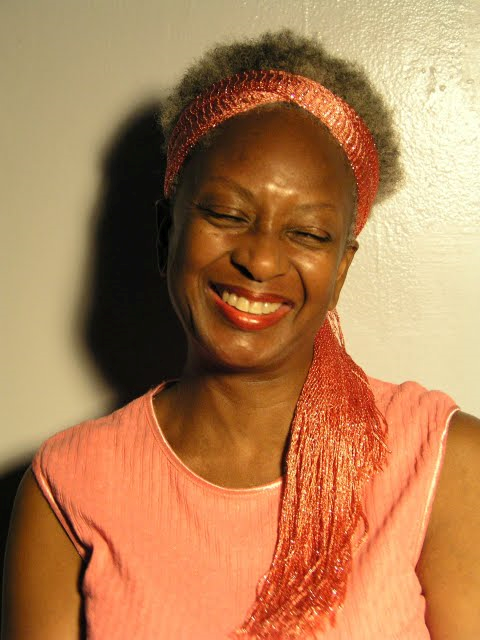
by Janine Harrington
As we head into our Misplaced/Displaced season we've been talking to artists who work in what could be considered "outside the box". We want to start conversations about how work can be created outside of traditional environments. We are thrilled to introduce you to Janine Harrington, a brilliant artist working in and around London. Here are her thoughts on Performing Outside the Box.
Monkeyhouse
has invited me to write something about my experiences of
“performing outside the box” and so to think about the question
of when a theatre space may not be the best place for a performance…
In this piece I will talk mainly about my own large-scale
choreographies (The Performing Book and The Bridge),
and how I have come to think about the relationship between what I
make and the contexts they are performed in. This isn’t going to be
an in-depth exploration of all the conventions of staging a dance
work, but a retrospective tracing of some of my decisions to make
works for spaces other than the theatre, with a particular focus on
the relationship between the audience and the performer in contexts
that you might call “out of the box”.
What’s (in) the
box?
Before getting to
performance outside the box, I am inclined to first spend a moment
thinking about what the “box” is and does. Andre Lepecki talks
about this as a ‘space that hosts the vanished dance, and that
produces the yet to be danced’. The theatrical space par excellence
is an uncharted space ‘not belonging to the realm of
representation, but that allows representation’. In other words
these spaces are frames for actions, and not speaking in and of
themselves. In one sense the “box” of one space could be
interchangeable for the “box” of another space through the shared
function. In that sense particular spaces almost disappear, or merge
into a potential space into which ideas of the thing to be staged can
be projected. The un-eventfulness of the box itself makes it possible
to stage something; it also makes it possible to stage several
different somethings in the same space on consecutive nights, or
stage the same something in various different boxes.
Choreographic
Objects
I think I have
always enjoyed the moment in the theatre before it all starts to
happen, and have written about it before as an extended moment in
which there is such possibility.
the moment when
the theatre goes dark and everything is just beyond, at the moment of
becoming...I’d like to continually stage that moment.
I think that for me-
as an audience member- an important part of that moment is that I am
engaged in the expectation and have not (perhaps yet) switched into a
more passive mode of receivership. There is lots of interesting
research into kinaesthetic empathy and the audience’s experience of
watching dance, and I am aware of not going into any detail about
that here. What I want to draw attention to is that the experience of
watching dancing is often correlated with less movement on the part
of the audience.
Attention
to how, why, where, by who and for what end we are moved were
concerns of the 2010 Hayward Gallery (London) exhibition MOVE:
Choreographing You. Here choreography
is aligned with manipulation, though
not necessarily with a negative connotation. Curator Stephanie
Rosenthal emphasised the focus on ‘visual artists, dancers and
choreographers who create sculptures and installations that directly
affect the movement of exhibition goers, turning spectators into
active participants’. Some of these exhibited works were described
as “choreographic objects”.
 In
a panel discussion in 2010 William Forsythe described a choreographic
object as an environment that affects perception and sometimes
induces a behaviour. The artist’s
gymnastic-type hoops The
Fact of Matter
(2009) shown during the MOVE exhibition are one example of what a
choreographic object, or environment might be. Interaction with the
hoops animates the body in a certain way and draws attention to our
physicalities- through bodily engagement with the work rather than
watching the work. The hoops hung at different heights across a
stretch of the gallery, and attendants invited the visitors to engage
with the hoops by trying to cross a section of the space by climbing/
swinging on them. In this structure each person is a soloist, dealing
with their unique mass and weight, strength and flexibility,
co-ordination, stamina, determination and perhaps even stage fright.
Entering the environment is to
enter a conversation with the object, with the object proposing a
score for that encounter. Forsythe talked about this as an
improvisation, a physical practice that is produced in the immediate
encounter- through the body- with a certain situations. He described
a new situation as revealing something otherwise unexposed as an
‘unconscious competence’ apparent in physical situations where
one has to be physically adaptive. In staged dance work
(choreographies) we see the physical competence of the dancers and
might think that we are experiencing the choreography, but Forsythe
has argued that we are actually watching the dancers’ experience of
the choreography. In this respect the interaction with choreographic
information through objects and novel physical situations has the
potential to bring the experience of dancing closer. I think of the
experience described in relation to Forsythe’s hoops as an
experience of a physical “state” rather than as a “steps”
approach to choreography. In this respect we might say the encounter
is a ‘first hand choreographic experience’, and that in terms of
transmitting a physical idea the choreographic object is immediate
and unmediated (Forsythe, 2010).
In
a panel discussion in 2010 William Forsythe described a choreographic
object as an environment that affects perception and sometimes
induces a behaviour. The artist’s
gymnastic-type hoops The
Fact of Matter
(2009) shown during the MOVE exhibition are one example of what a
choreographic object, or environment might be. Interaction with the
hoops animates the body in a certain way and draws attention to our
physicalities- through bodily engagement with the work rather than
watching the work. The hoops hung at different heights across a
stretch of the gallery, and attendants invited the visitors to engage
with the hoops by trying to cross a section of the space by climbing/
swinging on them. In this structure each person is a soloist, dealing
with their unique mass and weight, strength and flexibility,
co-ordination, stamina, determination and perhaps even stage fright.
Entering the environment is to
enter a conversation with the object, with the object proposing a
score for that encounter. Forsythe talked about this as an
improvisation, a physical practice that is produced in the immediate
encounter- through the body- with a certain situations. He described
a new situation as revealing something otherwise unexposed as an
‘unconscious competence’ apparent in physical situations where
one has to be physically adaptive. In staged dance work
(choreographies) we see the physical competence of the dancers and
might think that we are experiencing the choreography, but Forsythe
has argued that we are actually watching the dancers’ experience of
the choreography. In this respect the interaction with choreographic
information through objects and novel physical situations has the
potential to bring the experience of dancing closer. I think of the
experience described in relation to Forsythe’s hoops as an
experience of a physical “state” rather than as a “steps”
approach to choreography. In this respect we might say the encounter
is a ‘first hand choreographic experience’, and that in terms of
transmitting a physical idea the choreographic object is immediate
and unmediated (Forsythe, 2010).
An observation on
convention and access
When I work as a
performer it is mainly in works that are sited outdoors, in gallery
and museum contexts, and in studio-based works that overtly explore
how spaces can be constituted or evoked through lighting, voice and
texts. Aside from the different conventions and histories that are
engaged by working in and with spaces other than theatres, the space
issue is one that interests me particularly in terms of the scale of
encounter between performers and audience: a solo performed to 300
people seated in an auditorium/ a duet performed in a gallery whilst
a thousand visitors pass through over the course of a day/ 45
performers spread across a bridge in a large-scale interactive work
for the public… There are so many different imaginations and
manifestations of performance and the spaces in which that can happen
(and if this was a different piece we could also go into much more
detail about the differences between actual “box” spaces).
When I work with
young people and we talk about outdoor work I am often struck by
their desire to erect some sort of stage in an outdoor site, and so
replicate some of the conditions of the conventional theatre-space.
Whilst these sorts of stagings- on top of an outdoor site -can
increase the number of people it is possible to perform to (thinking
of music festivals etc), they rarely come with the range of technical
possibilities supported by indoor theatre spaces, and the sites
themselves invite a different engagement to that of the indoor
conventional theatre.
My own choreographic
works have mainly been performed at outdoor sites, or been
commissions for particular sites (site-specific) that happen to be
outdoors, but much of my work could be installed quite well indoors
in the right space. The key feature of my works is the movement of
the audience through the space of the performance. I’ll describe
the work via The Performing Book (2011-12) and then talk about
the audience’s movement in more detail.
Structures of
relating
The Performing
Book took a starting point from the relationship a reader has to
a book- how they can choose not to pick it up, skim through, turn
back the pages, start at the end etc. I transposed the structure of
this relationship to dance performance, creating a situation where
the audience could alter the movement according to parameters tied to
their own positions in space, their speed and direction.
As the work begins,
the line of dancers stands poised. The audience move past them and a
ripple of movement follows. If the audience stop, the dancers hover
between moments, in an extended moment of possibility. If the
audience walk in the opposite direction to their first, the movement
being danced in front of them reverses. As the audience move closer
the movement gets smaller, as they move further away it expands. If
people move quickly then the dancers speed up to a blur. If people
move slowly the dancers are able to reveal subtlety and detail
embedded in their phrases. As members of the audience start to
understand the rules of the work they are able to play in more
complex ways, and this in turn reveals details “programmed” into
the choreography.
It is not an
accident that some of the language I have used to describe The
Performing Book is similar to that used in other technologies. As
I have continued to work I have become more and more interested in
where the body is in relation to not only books, but in the use of
tablet media and smartphones. Starting by thinking about the journey
of writing from a fully embodied task, to gradually becoming more
distal (travelling from use of the whole arm in calligraphy, to the
hand, to the fingers in typing and to the use of the tip of the
finger in tablet media), I am curious about the sense of this process
leaving the body altogether. And then I wonder if that could happen.
The bodily experience has necessarily (always?) defined ways of
thinking and understanding; ten digits on the hands and feet have
given our counting systems a preference for working and thinking in
terms of 10s and multiples of 10. Our languages are suffused with
sayings which overtly reveal how movement and the body has helped to
structure ways of thinking, and with gestures which map out ideas
(e.g. the past is often indicated physically by a pointing a thumb
backwards, whereas the future indicated by a index finger pointing
forward). In Laban’s work spatiality is associated with
rationality.
In The Performing
Book and The Bridge, it is the centre of the individual
audience member’s body which acts like the finger would act on a
table screen. As the audience move their centres around they are
revealing and modulating the dance in a live processing encounter
with the audience. Like in the example from Forsythe, the experience
of the choreography happens at the level of the individual person’s
body as they navigate the work according to their own curiosity.
Unlike the Forsythe example there is a distinction between the
dancers and the audience in terms of material performed: each dancer
has a rigorously known phrase. The most important aspect is probably
that the audience have the agency to access the content of the work,
but must do so using their bodies. I see this as being quite
different from the set-up in a theatre where the audience are usually
sitting as a group on one side and the performers are on the other. I
would actually describe my work as being an installation which seeks
to harness the energetic presence of potential audience members in a
given space, producing a feed-back loop through recognised cause and
effect changes to the danced material, leading to a more complex
meeting of the resource of the dancers and the curiosity of the
audience.
Working in this way
brings it’s own set of issues that a show following a conventional
theatre code might not need to address. One issue is about limiting
the space of the work, but I have found the question about how to
manage time in such a performance to be the more pressing issue. It
is not clear how and when the work has begun and when it should end.
The movements can be danced in many different ways; forwards and
backwards is actually a loop. Audience do not have to arrive at a
particular time, and can stay as long as they want to. It is also
entirely possible that no one will stop to interact with the work,
though their movement will have a residual affect nonetheless.
I am not against
working with conventional theatre spaces, and it is something that I
can imagine doing at some point in the future, but for me the agency
of the audience is an important consideration, along with the space,
the performers, their movement and the sound environment.
No ending
I will pause there
for now. This discussion could go a lot further into the politics of
access and learning but I am not certain that you as readers are
still scrolling down! If you would like to see some small clips of my
work you can find them here.
Janine Harrington,
London, 2014.